Industrial Belt Alignment Tool | CUDSPRO

Precision Belt Alignment for Industrial Systems

Precise sheave alignment is critical for mechanical stability, component life, and overall efficiency in belt-driven equipment.

Even small deviations between pulleys introduce vibration, uneven load, and accelerated wear of belts and bearings.

In many installations, alignment is still treated as approximation instead of controlled correction.

This leads to performance loss, increased maintenance, and avoidable downtime.

Effective alignment requires a stable reference, repeatable adjustment, and a system that maintains accuracy under real operating conditions both indoor and outdoor.

CUDSPRO alignment systems are built for industrial use, combining precision, durability, and practical design for reliable daily operation.

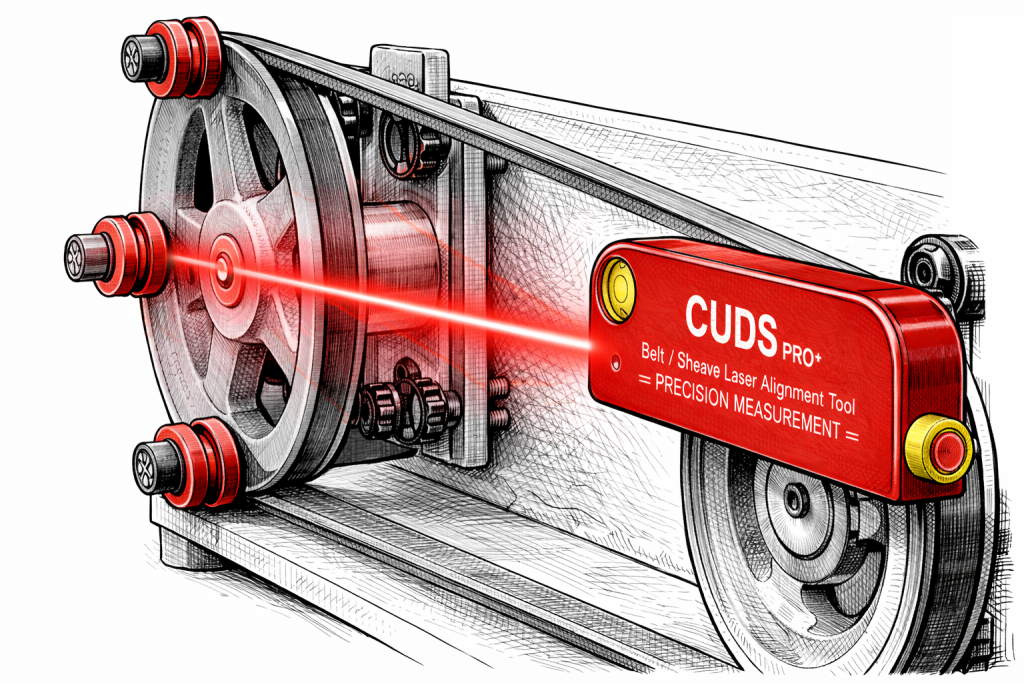
Red Belt Pulley Laser Alignment Tool LA12000R

Ideal for indoor use, ensuring precise alignment in controlled environments.

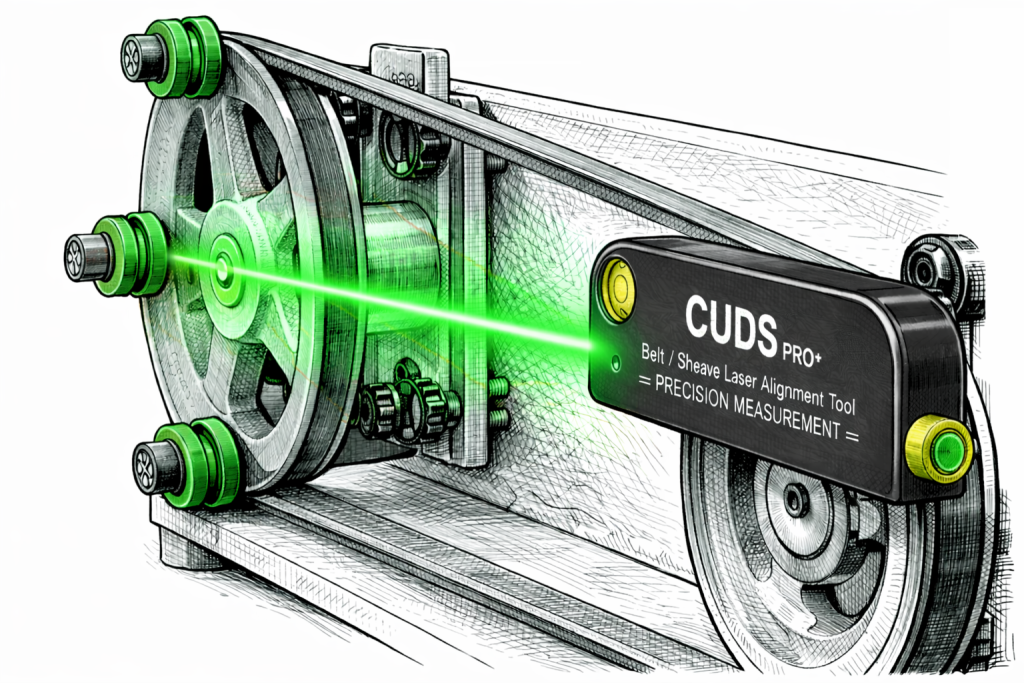
Green Belt Pulley Laser Alignment Tool LA12000G

Optimized for indoor and outdoor applications, offering enhanced visibility in bright environments and making parallel and angular alignment adjustments quick and easy.

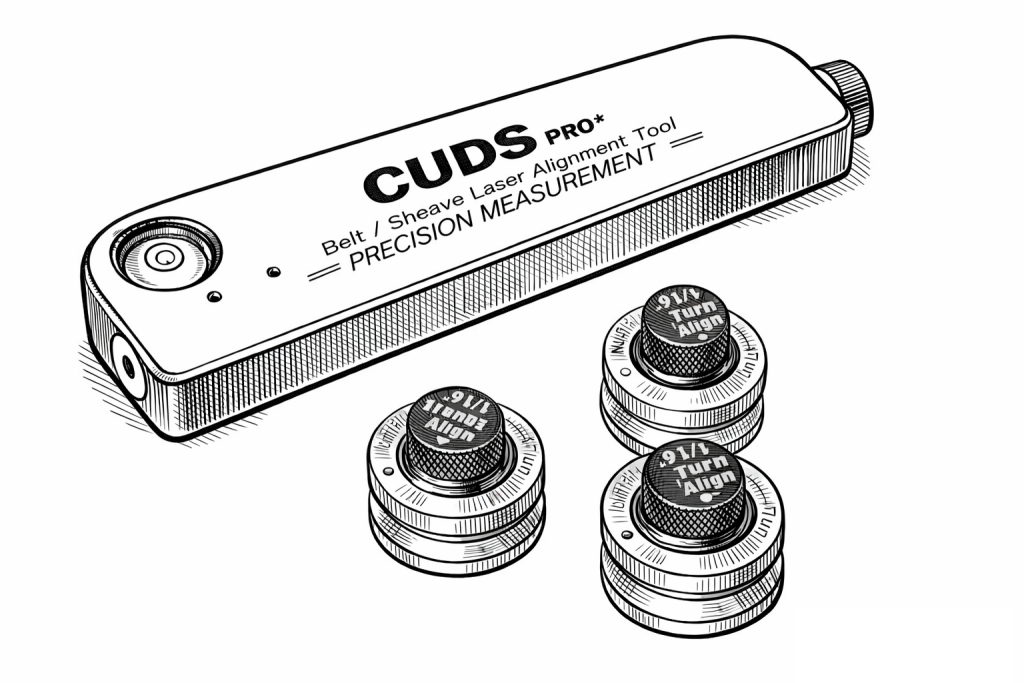
Magnetic Base · CNC Aluminum · Horizontal & Vertical Level · Fast Setup

Industrial Alignment Challenges

Mechanical misalignment in belt-driven systems is a common issue.

Even minor angular or parallel deviations lead to vibration, uneven load distribution, and reduced stability.

These effects develop gradually, lowering efficiency and increasing maintenance over time.

Correction requires a measurable reference that provides clear visual guidance and repeatable adjustment under real working conditions.

CUDSPRO alignment systems provide this through a stable reference and robust construction, ensuring consistent performance in both indoor and outdoor environments.

Engineered Alignment Performance

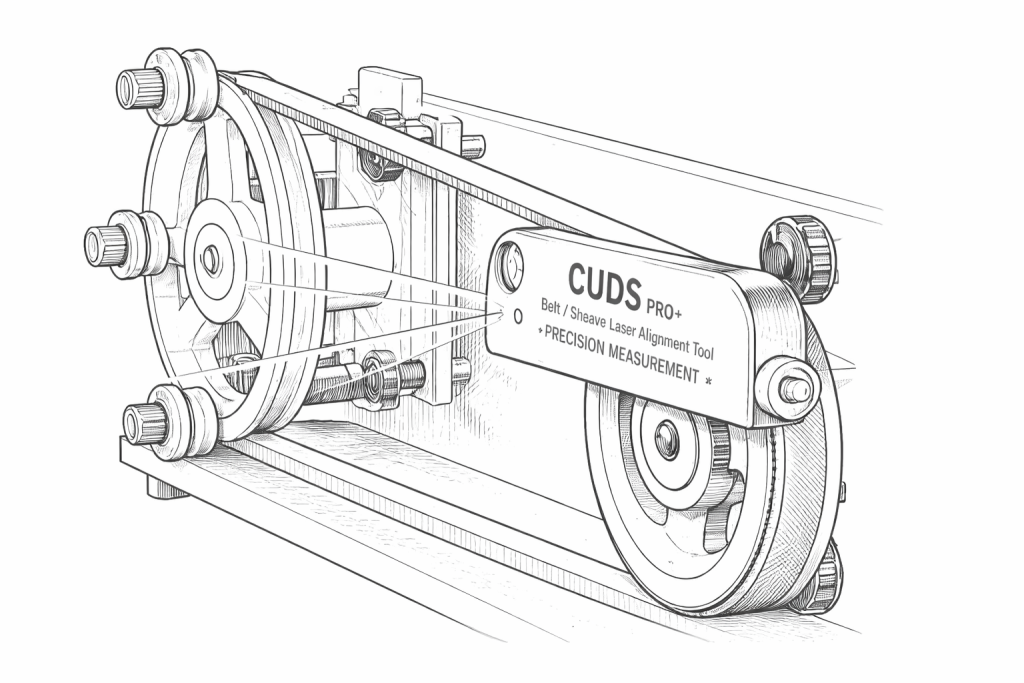
CUDSPRO alignment tools provide a clear and stable reference for accurate belt and sheave alignment.

The system allows quick identification of both parallel and angular misalignment, enabling fast and controlled adjustment.

The magnetic base ensures secure positioning on the pulley, while the rigid aluminum body maintains stability during use.

A dual bubble level (horizontal and vertical) helps position the tool correctly from the start, reducing setup errors and improving alignment accuracy in real conditions.

Belt Failures Rarely Start With the Belt

Most belt failures do not begin with the belt — they begin with alignment.

In many systems, belts are blamed for cracking, vibration, noise, or overheating. In reality, the cause is often pulley misalignment, even when deviations are small. 

When alignment is almost correct, problems develop gradually. Load becomes uneven, bearings absorb unnecessary stress, tracking shifts, and efficiency drops. 

Over time, this leads to shorter service intervals and unplanned downtime.

Alignment is not a luxury — it is control.

Measuring alignment instead of estimating it extends belt life, reduces vibration, and improves system stability.

Scroll to Top